
10 Most Common Baseball Injuries
Baseball is an action-packed sport. Athletes have speed, strength, accuracy, and power. While baseball is a low contact sport, many players can be prone to many different injuries. Some of the main baseball injuries involve overuse, collisions, or improper technique. These injuries can happen to any player at any level of baseball and it’s important to recognize signs of injury and how to approach them.
Below is 10 of the most common injuries found amongst baseball players, a description of the injury, symptoms, and treatment.
Most Common Shoulder Baseball Injuries
Labral Tear (Shoulder)
What is it:
Tear or degeneration of the cartilage rim (labrum) that deepens the shoulder socket, helping to stabilize your shoulder.
Mechanism of Injury:
Repetitive overhead throws, muscle weakness in your shoulders, previous shoulder injuries, a forceful dive on the ground or collision into the wall when catching the baseball, traumatic shoulder dislocations and instability.
Symptoms:
Loss of range of motion, shoulder instability (you feel like your shoulder is going to fall out), pain around the socket, a grinding sensation.
Treatment:
Besides RICE (rest, ice, compression, elevation, and acute injury management for the first 48-72 hours, treatment includes physiotherapy to improve shoulder stability and control. Occasionally surgery is needed if not improving.
Shoulder Impingement Syndrome
What is it:
Shoulder structures (tendons and bursa) get pinched under the acromion (part of the shoulder blade) from frequent overhead throws.
Mechanism of Injury:
Common in position players as well as pitchers who are repeatedly throwing a baseball, poor technique, or muscle weakness when batting can also lead to this injury.
Symptoms:
Sharp or pinching feeling in the shoulder, pain when doing overhead movement, weakness in your shoulder, a decreased range of motion.
Treatment:
Besides RICE (rest, ice, compression, elevation, and acute injury management for the first 48-72 hours, modified shoulder movements (e.g., avoid overhead positions), treatment includes physiotherapy for correction of muscle imbalances and other biomechanical issues, other types of therapy such as chiropractic and massage therapy, strengthening especially for the shoulder blade muscles, and throwing technique analysis and correction.
Occasionally injections such as cortisone and platelet-rich plasma injections are needed if not improving.

Rotator Cuff Strain or Tendinopathy
What is it:
Inflammation, degeneration, or micro-tearing of the shoulder tendons in the rotator cuff group (4 muscles and tendons that stabilize your shoulder). This is common for pitchers as there is repetitive stress on the shoulder from pitching.
Mechanism of Injury:
Weakness or imbalance of your rotator cuff muscle group, poor posture (rounder shoulders/hunchback), repetitive movements such as pitches, and poor technique.
Symptoms:
Dull ache or pinching sensation in your shoulder, pain or weakness while doing overhead motions and overhead pickleball hits.
Treatment:
Besides RICE (rest, ice, compression, elevation, and acute injury management for the first 48-72 hours, modified shoulder movements (e.g., avoid overhead positions), treatment includes physiotherapy for correction of muscle imbalances and other biomechanical issues, other types of therapy such as chiropractic and massage therapy, strengthening especially for the shoulder blade muscles, and throwing technique analysis and correction.
Occasionally injections such as cortisone and platelet-rich plasma injections are needed if not improving.
Most Common Elbow Baseball Injuries
Ulnar Collateral Ligament (UCL) Injury
What is it:
Damage (usually a sprain or tear) of the ulnar collateral ligament found on the inside of your elbow. This is another common injury found in pitchers since this ligament helps stabilize the elbow when throwing a baseball.
Mechanism of Injury:
Overuse/repetition of high-speed pitches, lack of rest and recovery time, poor mechanics.
Symptoms:
Pain on your inner elbow during and after throwing, decreased strength, speed or control, elbow stiffness.
Treatment:
Besides RICE (rest, ice, compression, elevation, and acute injury management for the first 48-72 hours, treatment includes splint or brace, physiotherapy for forearm strengthening exercises, as well as a guide to return to play. Surgery is needed if you suffer from a complete UCL tear.

Little League Elbow (Medial Epicondyle Apophysitis)
What is it:
An overuse injury, common in little league baseball players where stress is put on the growth plate in your elbow, due to repetitive throwing.
Mechanism of Injury:
Overuse without enough rest for baseball players that are not fully developed.
Symptoms:
Slight swelling, pain on the inner elbow as well as tenderness to the touch, painful when throwing a baseball.
Treatment:
Besides RICE (rest, ice, compression, elevation, and acute injury management for the first 48-72 hours, treatment includes relative rest with no pitching until fully healed, ice, throwing modifications for return to play, shoulder & arm strengthening, pitch restrictions to reduce overuse risk, throwing technique analysis and correction.
Most Common Lower Body Baseball Injuries
Hamstring Strain
What is it:
Overstretching or tearing one or more of the hamstring muscles in the back of your thigh.
Mechanism of Injury:
Explosive acceleration after batting to run to a base, an outfielder running to make a catch, stealing a base, catchers can be especially prone due to constant squatting during the game or chasing a foul ball.
Symptoms:
Sharp pain in the back of your thigh, swelling, bruising, muscle weakness, some difficulty while walking or running, may feel tender.
Treatment:
Besides RICE (Rest, Ice, Compression, Elevation and acute injury management for the first 48-72 hours, treatment includes calf sleeves, physiotherapy for strengthening and mobility, and advice about return to playing baseball. Chiropractic and massage can also be beneficial.
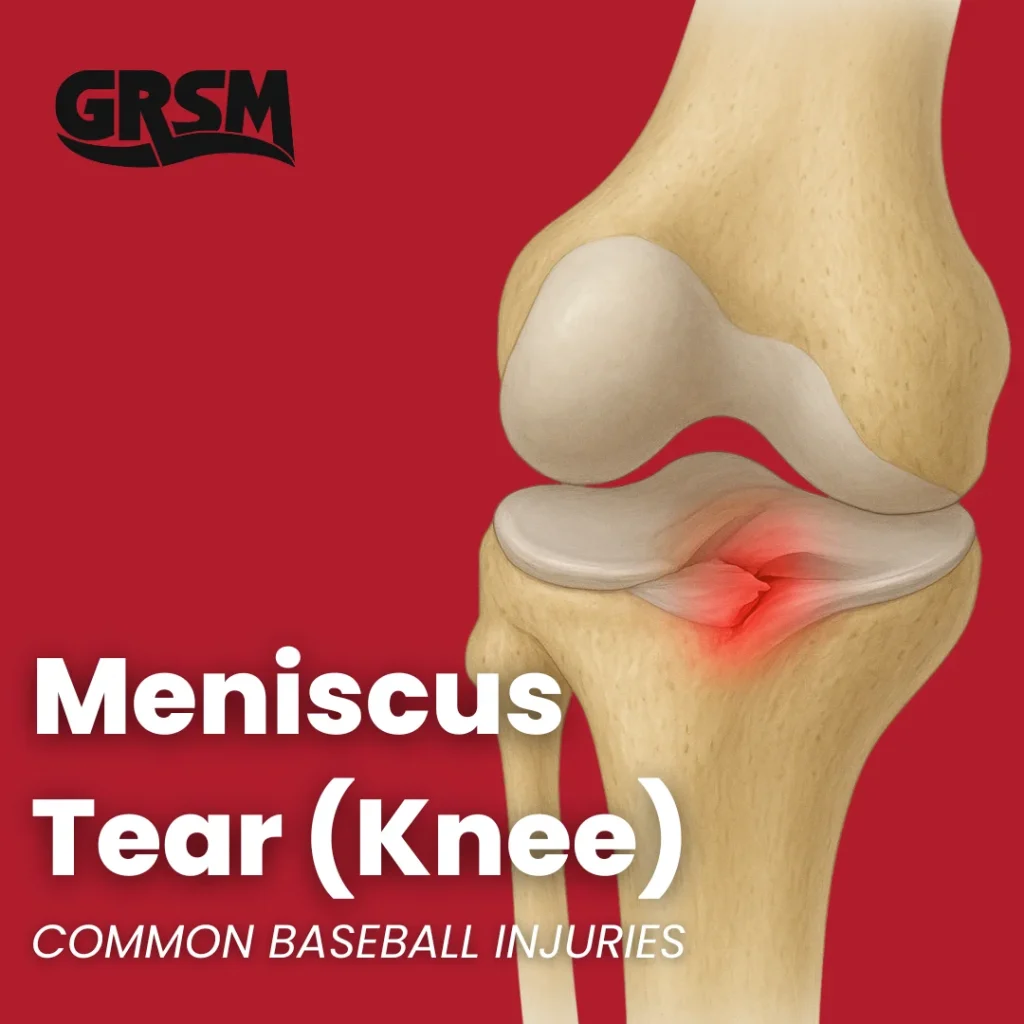
Meniscus Tear (Knee)
What is it:
A tear in the medial or lateral cartilage that acts as cushioning in your knee.
Mechanism of Injury:
Pain around your knee, swelling, stiffness, clicking sound in your knee, difficulty during full range of motion of your knee.
Symptoms:
Pain or a decreased range of motion after periods of rest, increased pain during or after pickleball, stiffness in the back your ankle.
Treatment:
Besides RICE (rest, ice, compression, elevation, and acute injury management for the first 48-72 hours, treatment includes bracing, physiotherapy to improve quad strength and knee stability. If not improving then surgery (arthroscope) is often needed.
Back Strain
What is it:
The muscles or tendons in your back become stretched or torn. This typically happens in the lower/lumbar region of the back.
Mechanism of Injury:
Over-rotating when at bat, sudden twists, poor posture, or repetitive twisting motions such as pitching.
Symptoms:
Dull or achy sensations in your lower back, muscle tightness, pain during bending or twisting movements and limited mobility.
Treatment:
Besides RICE (rest, ice, compression, elevation, and acute injury management for the first 48-72 hours, treatment includes physiotherapy for correction of muscle imbalances and other biomechanical issues (especially deficits in core strength), other types of therapy such as chiropractic and massage therapy, strengthening and flexibility.
Most Common Core & Rib Baseball Injuries
Oblique Muscle Strain
What is it:
Damage (strain or tear) done to the external or internal oblique muscle of your abdomen.
Mechanism of Injury:
Commonly found in batters and pitchers when forceful rotation and quick turning is required, an insufficient warm-up can lead to stiff muscles more prone to strains or tears.
Symptoms:
Sharp pain on the side of your torso or ribs, pain while taking deep breaths, twisting or bending, bruising may also appear if more severe.
Treatment:
Besides rest, ice and acute injury management for the first 48-72 hours, treatment can include physiotherapy for core strengthening and stabilizing exercises and massage therapy.

Most Common Hand & Wrist Baseball Injuries
Wrist or Finger Sprains
What is it:
Overstretching or slightly tearing the ligaments in your fingers or wrist.
Mechanism of Injury:
Jamming your finger when sliding into a baseball or catching a ball, getting hit by a pitch, landing on your hand awkwardly during a dive.
Symptoms:
Limited range of motion, pain, swelling, weakened grip.
Treatment:
Besides RICE (rest, ice, compression, elevation, and acute injury management for the first 48-72 hours, wrist and finger bracing or taping can be beneficial to reduce movement and help stabilize, physiotherapy to improve grip strength and range of motion.
It’s important for baseball players to remain agile and properly conditioned to help prevent injuries. Make sure you’re doing the necessary preventative measures, to reduce your risk of one of these injuries. If you believe you’re suffering from one of these injuries talk to a professional so you can get back to playing baseball!
Services
Our mission is to help athletes and active individuals achieve their sports and exercise goals!